

- access_time28 November 2025
- account_circleJuan Dangelo
- Ceramic Coating
Every yacht owner faces the same dilemma eventually: How do I best protect my investment?
For decades, the answer was simple: a tin of Carnauba wax and a lot of elbow grease. But the marine industry has evolved. Ceramic technology, once reserved for exotic cars and superyachts, has trickled down to becoming a standard option for vessels of all sizes.
So, is the traditional way still the best way? Or has the new technology rendered wax obsolete? In this head-to-head comparison, we break down Wax vs. Ceramic Coating to help you decide which protection strategy fits your boating lifestyle.
What is the traditional marine wax?
Marine wax is typically a blend of natural Carnauba wax and synthetic polymers. It sits on top of your gelcoat or paint like a blanket. It provides a warm, natural glow and offers a sacrificial layer that takes the beating from the sun and salt so your hull doesn't have to.
What is marine ceramic coating?
Ceramic coating is a liquid polymer (usually Silica-based) that chemically bonds with the surface. Instead of sitting on top like a blanket, it hardens into a rigid, glass-like shell. It is engineered to be harder, smoother, and longer-lasting than any wax.
Head-to-Head Comparison
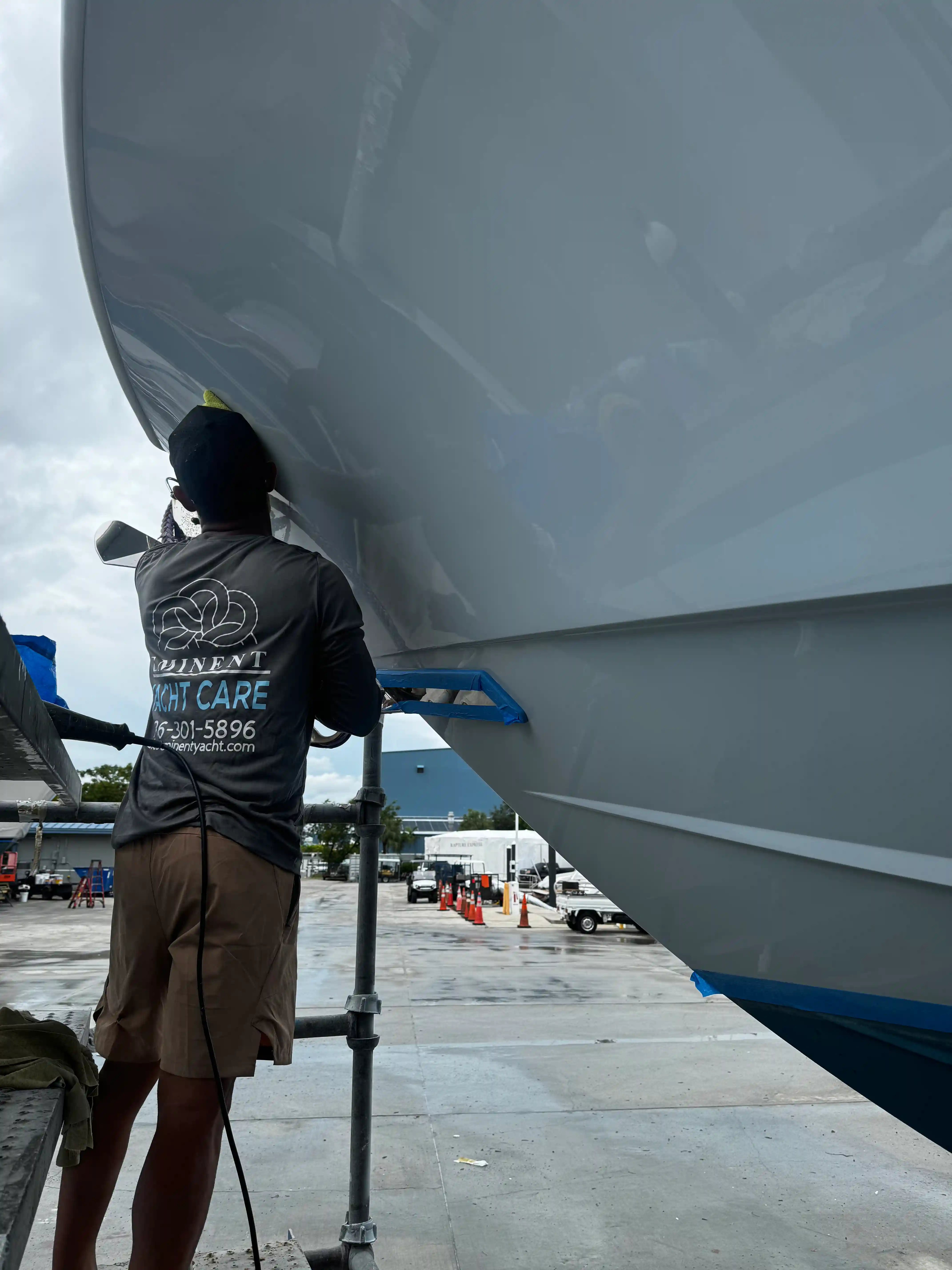
To determine the winner, we need to look at four key categories: Longevity, Protection, Maintenance, and Cost.
Round 1: Longevity
-
Wax: In a harsh marine environment (saltwater + strong UV), wax degrades quickly. You can expect a high-quality wax to last 3 to 4 months. This means you are waxing your boat 3-4 times a year to maintain true protection.
-
Ceramic: A professional-grade marine ceramic coating is semi-permanent. Depending on the number of layers applied, it can last 18 to 36 months.
-
Winner: Ceramic Coating (by a landslide).
Round 2: Protection Level
-
Wax: Wax offers good UV resistance, but it is soft. It melts under high heat and washes away with detergents. It offers minimal protection against bird droppings or exhaust soot, which can eat through the wax and stain the gelcoat.
-
Ceramic: The coating forms a hard shield. It is highly resistant to chemicals (fuel spills, bird lime), UV rays (preventing oxidation), and heat. Because it creates a smoother surface tension, it is much harder for contaminants to stick.
-
Winner: Ceramic Coating.
Round 3: Aesthetics ( The Shine)
-
Wax: Wax is known for a "warm," natural glow. Many traditionalists prefer the soft, deep shine of a freshly waxed hull.
-
Ceramic: Ceramic provides a "sharp," glass-like candy shell appearance. It is intensely glossy and reflective. It tends to look "cleaner" and brighter than wax.
-
Winner: Tie (It comes down to personal preference).
Round 4: Cost
-
Wax: The upfront cost is low. A detailer might charge a few hundred dollars (depending on boat size) to wash and wax. However, because you have to do it 3-4 times a year, the annual cost adds up.
-
Ceramic: The upfront cost is high—often 3x to 4x the price of a wax job. This is due to the mandatory paint correction (polishing) required before application. However, you only pay this once every few years.
-
Winner: Wax (Short term) / Ceramic (Long term).
|
Feature |
Traditional Marine Wax |
Ceramic Coating |
|
Durability |
3 - 4 Months |
1.5 - 3 Years |
|
UV Protection |
Good (but fades fast) |
Excellent (Long-term) |
|
Heat Resistance |
Low (can melt/soften) |
High (extremely stable) |
|
Cleaning Effort |
Moderate |
Low (Hydrophobic/Easy Rinse) |
|
Upfront Cost |
$ (Low) |
$$$ (High) |
|
Surface Prep |
Minimal required |
Extensive correction required |
Which is Right for You?
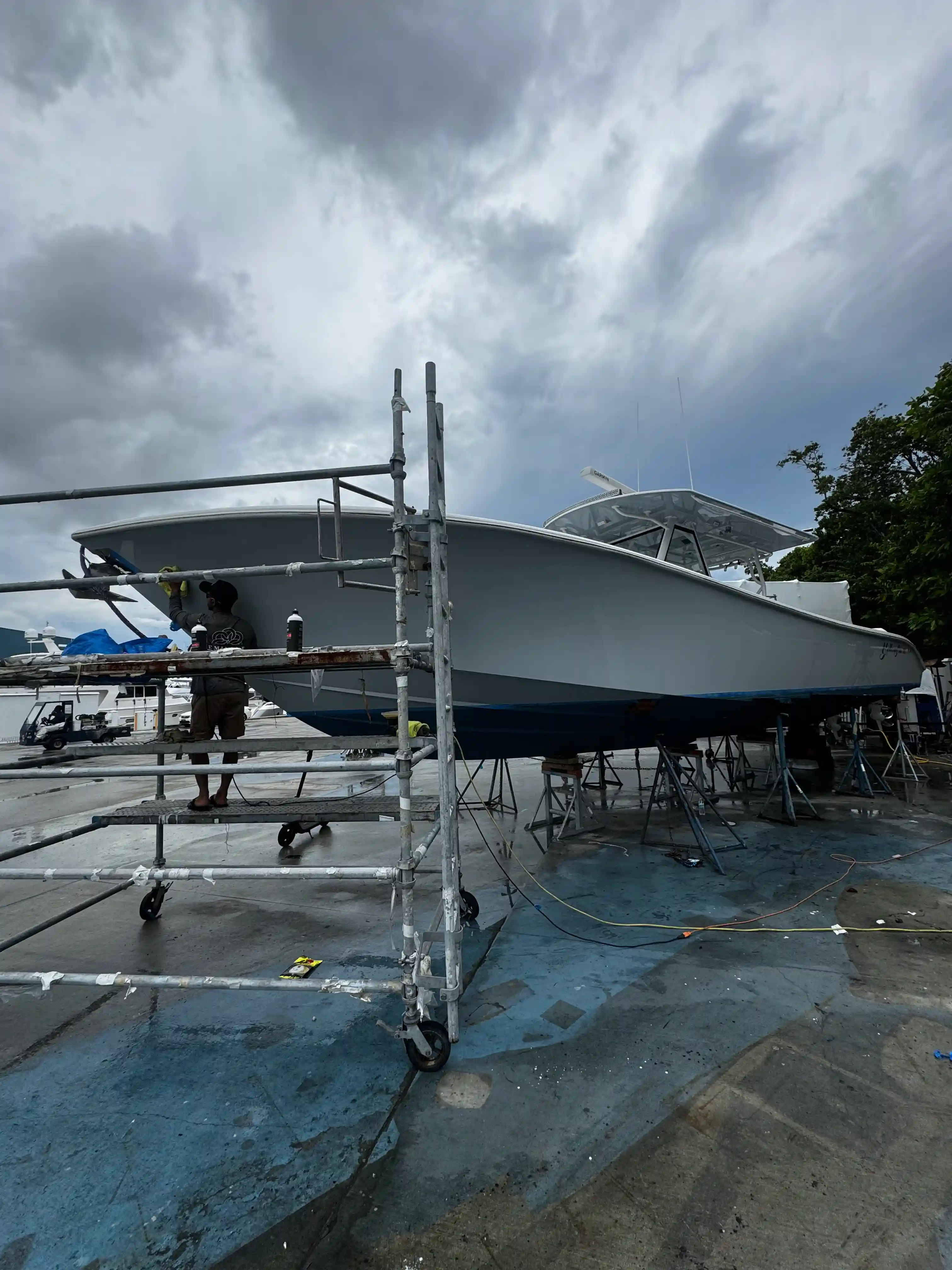
Neither product is "wrong," but they serve different types of owners.
Choose Marine Wax if:
-
You are on a tight budget: You prefer paying smaller amounts frequently rather than a large lump sum.
-
You enjoy DIY: Some captains find the ritual of waxing their boat therapeutic.
-
The gelcoat is old: If your boat's gelcoat is extremely porous or nearing the end of its life, ceramic coating may not bond correctly. Wax is more forgiving on older, tired surfaces.
Choose Ceramic Coating if:
-
You hate maintenance: You want to spend your time fishing or cruising, not buffing. You want wash-downs to take 20 minutes, not an hour.
-
You want the best resale value: A ceramic-coated boat stays glossy and oxidation-free, which commands a higher price when you sell.
-
You keep your boat in the water: If your boat lives in a slip exposed to the sun 24/7, wax will not survive the summer. Ceramic is essential for constant outdoor exposure.
Is your boat ready for an upgrade?
Recent Posts
- Created at : 16 December 2025
- Created at : 16 December 2025
- Created at : 29 November 2025