

- access_time02 September 2025
- account_circleJuan Dangelo
- Ceramic Coating
Owning a yacht is a major investment, and the marine environment is unforgiving. Salt‑water spray, ultraviolet (UV) radiation, algae and bird droppings slowly degrade gel‑coated finishes and upholstery. Without protection, the paint oxidizes, colors fade and surfaces become difficult to clean. A marine‑grade ceramic coating is a modern way to shield your yacht’s hull and topsides from this relentless environment. This blog explains how ceramic coatings work, why they offer superior protection compared with traditional waxes and sealants, and how to apply and maintain them correctly.
What is a Marine Ceramic Coating?
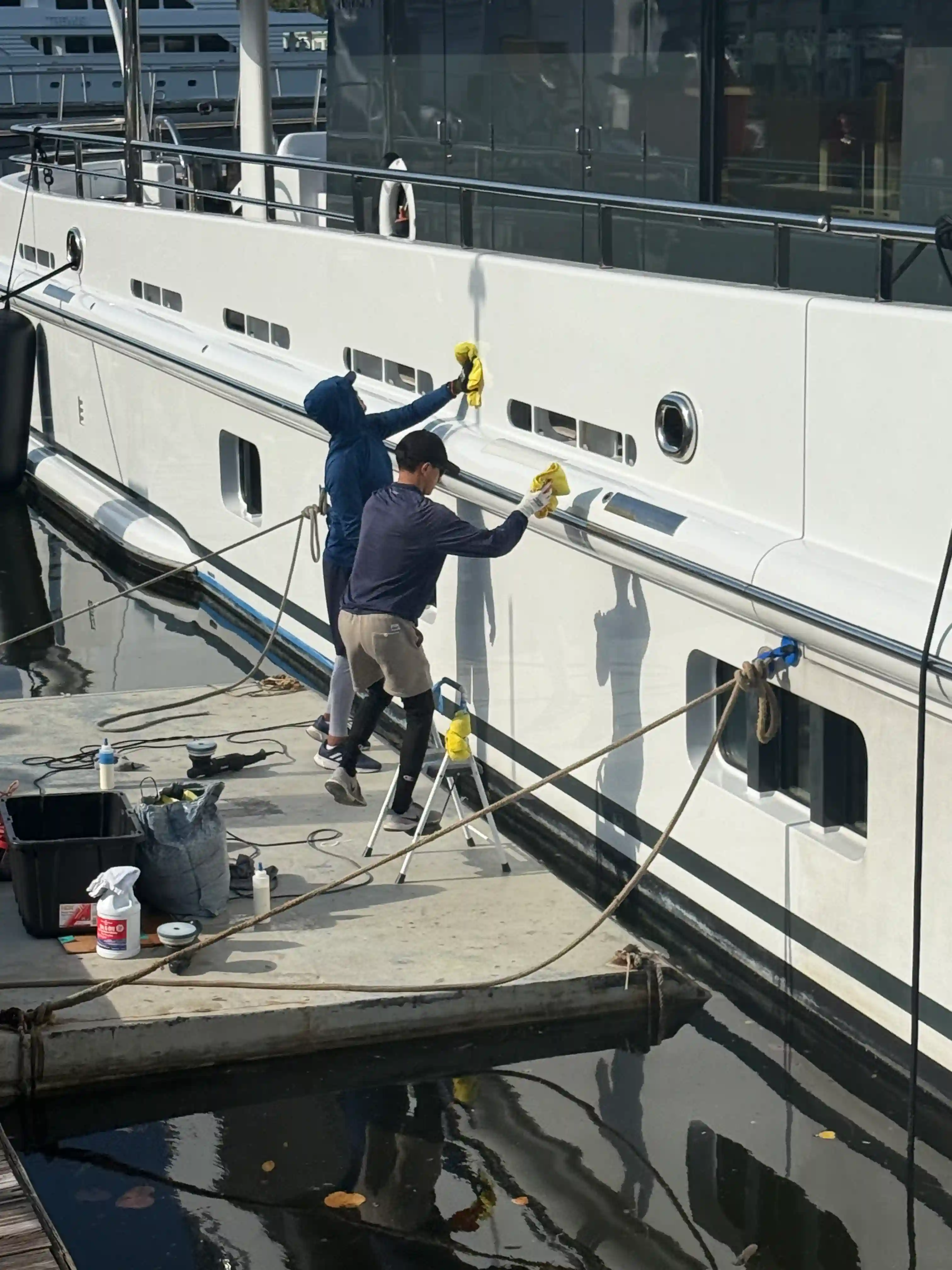
A marine ceramic coating is a liquid polymer containing nano‑sized ceramic (often silica or quartz) particles suspended in a carrier fluid. When applied to the gelcoat or painted surfaces, the coating chemically bonds and cures into a hard, hydrophobic layer that fills microscopic pores. The nanotechnology behind these coatings creates a semi‑permanent, water‑repelling surface that repels dirt and contaminants; water beads and rolls off rather than clinging to the hull. Because the coating is flexible and bonds at a molecular level, it can expand and contract with temperature changes without cracking. Unlike waxes that sit on top of the gelcoat, a ceramic coating becomes a part of the surface and lasts for years.
Why Choose Ceramic Coating for a Yacht? Key Benefits
Ceramic coatings provide multiple layers of protection and performance benefits. The following advantages make them particularly appealing for yachts:
-
Hydrophobic, self‑cleaning surface: The slick, water‑repelling finish prevents algae, dirt and bird droppings from bonding to the hull. When underway, fouling washes off easily, reducing scrubbing and cleaning time.
-
Protection from UV and environmental damage: The coating blocks harmful UV rays and shields the gelcoat from saltwater, acid rain and chemical contaminants. By sealing out impurities, it prevents chalking and oxidation.
-
Glossy, long‑lasting finish: Ceramic coatings provide a mirror‑like shine that enhances the yacht’s color. Because they are more durable than waxes, the glossy look lasts for years instead of weeks.
-
Protection for soft components: Marine coatings can be applied to rubber trims, seating and canvas, protecting these softer materials from UV damage and staining.
-
Scratch and scuff resistance: The hard ceramic layer fills small swirl marks and resists abrasion; although not completely scratch‑proof, it helps prevent scuffs from docks and debris.
-
Improved performance and fuel efficiency: The hydrophobic surface reduces drag, allowing the yacht to glide more efficiently through water and potentially improving fuel economy.
-
Reduced maintenance: Ceramic coatings are easy to clean and do not require frequent waxing or polishing. A coated hull can often be cleaned with soap and water, and the hydrophobic effect reduces the need for aggressive scrubbing.
-
Increased resale value: Maintaining a yacht’s exterior protects the underlying gelcoat and preserves the vessel’s value; prospective buyers appreciate the long‑term protection and shine a ceramic coating provides.
How Ceramic Coatings Compare with Traditional Waxes
|
Attribute |
Marine ceramic coating |
Traditional wax/sealant |
|---|---|---|
|
Durability |
Bonds to gelcoat; lasts years |
Temporary, lasts weeks/months |
|
Hydrophobicity |
Strong water‑beading, self‑cleaning |
Limited water repellence |
|
UV/salt protection |
Blocks UV and saltwater damage |
Minimal UV protection |
|
Maintenance frequency |
Wash with soap; occasional top‑up |
Frequent re‑waxing needed |
|
Effect on performance |
Reduces drag and improves fuel economy |
Little to no effect |
Selecting the Right Ceramic Coating
Not all ceramic coatings are equal. Yachts require marine‑grade products formulated to bond with gelcoat and withstand constant saltwater exposure. When shopping, look for coatings designed specifically for boats rather than automotive formulas. Consider professional‑grade products if you want multi‑year durability; DIY spray‑on coatings provide shorter‑term protection (three to twelve months) but are easier to apply. Seek out reputable manufacturers, read user reviews and verify that the product includes UV inhibitors and is compatible with your yacht’s finish.
Preparing Your Yacht for Ceramic Coating
The success of a ceramic coating depends on meticulous preparation. The coating will lock in whatever condition the surface is in, so correcting imperfections first is essential. Follow these steps:
-
Correct oxidation and defects: Polish the gelcoat or paint to remove oxidation, stains and swirl marks. Ceramic coatings do not contain fillers or cleaners, so any imperfections will remain visible beneath the hard layer. Boating magazine advises that applying a ceramic over chalky gelcoat can intensify sunlight and accelerate oxidation.
-
Wash thoroughly: After correction, wash the hull and topsides with a high‑sudsing, pH‑balanced marine soap to remove dust, salt, oils and polishing residue. Some professionals use specialized iron/fallout removers and UV‑wash detergents for deeper cleaning.
-
Remove oils and waxes: Use isopropyl alcohol or a panel‑wipe product to strip any remaining waxes or oils. This ensures a pure surface so the ceramic can bond properly.
Applying the Ceramic Coating
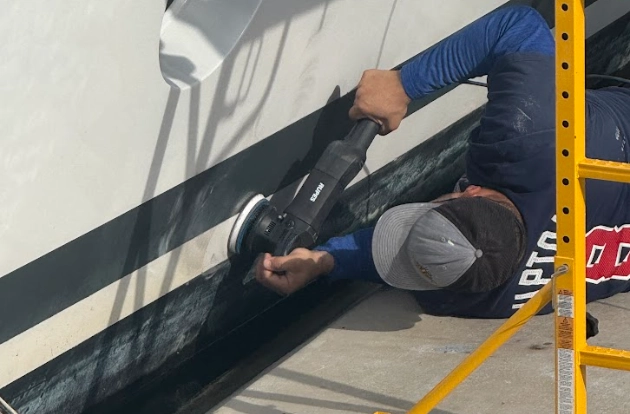
Many yacht owners hire professionals, but DIY application is possible with patience and the right supplies. The following technique, adapted from YACHTE’s guide:
-
Work in small sections: Apply the coating in areas roughly 3×3 feet, starting at the hull or highest part of the topsides and working down.
-
Prime the applicator: Saturate the supplied applicator pad with 10‑15 drops of ceramic coating before starting.
-
Cross‑hatch application: Spread the coating in a cross‑hatch pattern (vertical then horizontal) to ensure even coverage.
-
Observe flash time: Wait until the coating starts to “flash” or become slightly tacky (about five minutes, depending on temperature). Do not allow it to over‑dry.
-
Level and buff: Wipe the section gently with a microfiber towel to level the coating, then follow with two more clean towels to remove any residue.
-
Repeat and add a second coat: Continue section by section around the yacht. A second coat ensures complete coverage and maximizes durability.
-
Apply a topcoat (optional): Some ceramic systems include a sacrificial topcoat to add gloss and extend longevity. Topcoats are spray‑on formulas applied after a few washes and can be refreshed every few months.
Caring for a Ceramic‑Coated Yacht
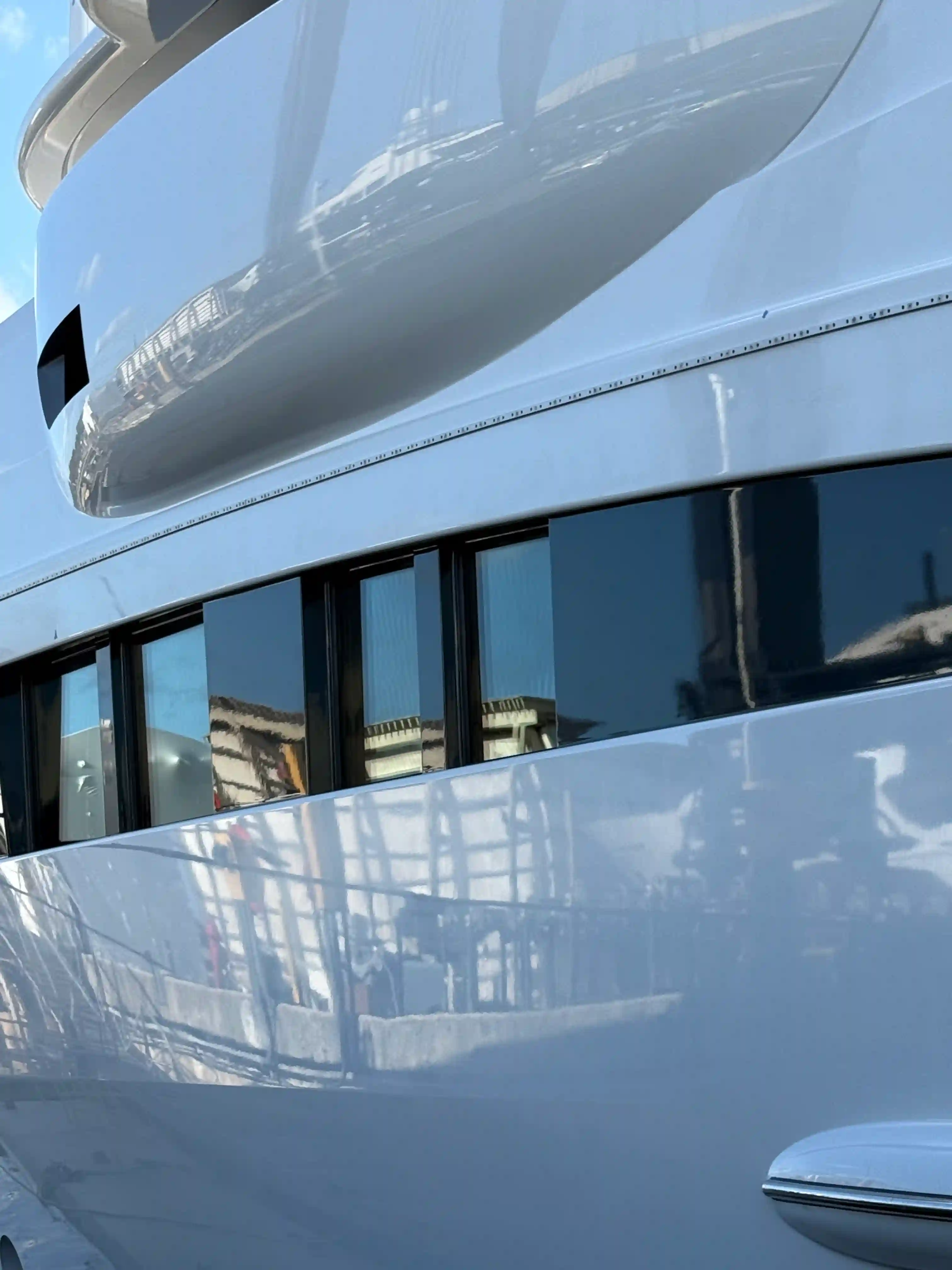
A ceramic coating dramatically reduces maintenance, but proper care is still necessary to achieve its full life (18–24 months for many products). Austin Frye at YACHTE emphasises that neglecting the coating or using harsh products can degrade it prematurely. Follow these guidelines:
Dos and Don’ts
-
Do not use harsh chemicals: Bleach, degreasers or strong cleaners can strip the coating. Instead, use pH‑balanced soaps formulated for ceramic coatings.
-
Don’t leave the boat dirty: Allowing salt and grime to sit on the coating accelerates wear. Rinse the hull regularly (ideally every week) and chamois dry. The hydrophobic surface allows dirt to rinse away easily.
-
Avoid stiff brushes or abrasive pads: Aggressive scrubbing will scratch the coating. Use soft microfiber wash mitts.
-
Skip wash‑and‑wax soaps: Waxes and petroleum ingredients clog the ceramic’s pores and reduce hydrophobicity.
Recommended Care
-
Use SiO₂‑infused soap: Wash the boat every other week with a soap containing silica to rejuvenate the coating. Ordinary marine soaps are fine if they are wax‑free.
-
Apply silica spray monthly: A silica spray enhances gloss and reinforces the chemical bond; apply it like a spray wax.
-
Recharge with ceramic spray semi‑annually: For long‑term protection, some manufacturers recommend a semi‑annual ceramic spray to replenish the coating’s hydrophobic properties.
-
Inspect and reapply: When you notice water no longer beads up or the gloss fades, reapply a maintenance topcoat or a new ceramic layer.
A marine ceramic coating is more than a cosmetic upgrade—it is an investment in your yacht’s longevity. By filling micro‑pores and bonding to the gelcoat, ceramic coatings provide hydrophobic, UV‑resistant protection that far outperforms waxes or sealants. With proper surface preparation, careful application and routine maintenance, a ceramic coating keeps your yacht looking pristine, reduces drag and fuel consumption, and preserves resale value for years to come. For first‑time users or large yachts, professional application is recommended to ensure full coverage and curing. Once applied, follow the care regimen and enjoy the confidence that your yacht’s exterior is protected against the harsh marine environment.
Ready to protect your yacht with a professional ceramic coating?
Explore Eminent Yacht’s ceramic coating services to find out how their marine‑grade coatings can preserve your vessel’s beauty and performance.
Recent Posts
- Created at : 16 December 2025
- Created at : 16 December 2025
- Created at : 29 November 2025