

- access_time17 November 2025
- account_circleJuan Dangelo
On every ceramic coating project I handle at Eminent Yacht Care, the first thing I explain is that ceramic isn’t “fancy wax.” It’s a liquid polymer that chemically bonds to your yacht’s gelcoat or paint at the molecular level. Instead of just sitting on top of the surface, it becomes part of it.
Here’s what that means in practice:
-
Permanent-style protection
Once cured, marine-grade ceramic forms a hard, transparent layer that resists breakdown far better than wax or sealants. -
Hydrophobic, self-cleaning behavior
Water beads and sheets off the surface, taking salt and grime with it. That means less scrubbing, fewer water spots, and faster washdowns. -
Stable under heat and UV
Traditional waxes soften, melt, and disappear under South Florida sun. Ceramic coatings are engineered to remain stable even under intense UV exposure.
Because the coating is bonded to the paint or gelcoat, your yacht gets consistent protection over a much longer period—measured in years rather than weeks.
What is gelcoat
Gelcoat is a pigmented polyester or vinylester resin sprayed into the mold before the fiberglass is laid up. When the hull is built, that gel layer ends up on the outside as the visible surface.
What it does:
-
Protects the underlying fiberglass from UV, water and chemicals
-
Provides the color and shine (white, navy, dark grey, etc.)
-
Acts as a barrier to help prevent water intrusion and osmosis blisters
Can you paint over gelcoat
Yes, you can paint over gelcoat—but you have to prep it properly or the paint will peel, flake, or look awful pretty fast.
The Three Big Enemies: UV, Salt, and Chemicals
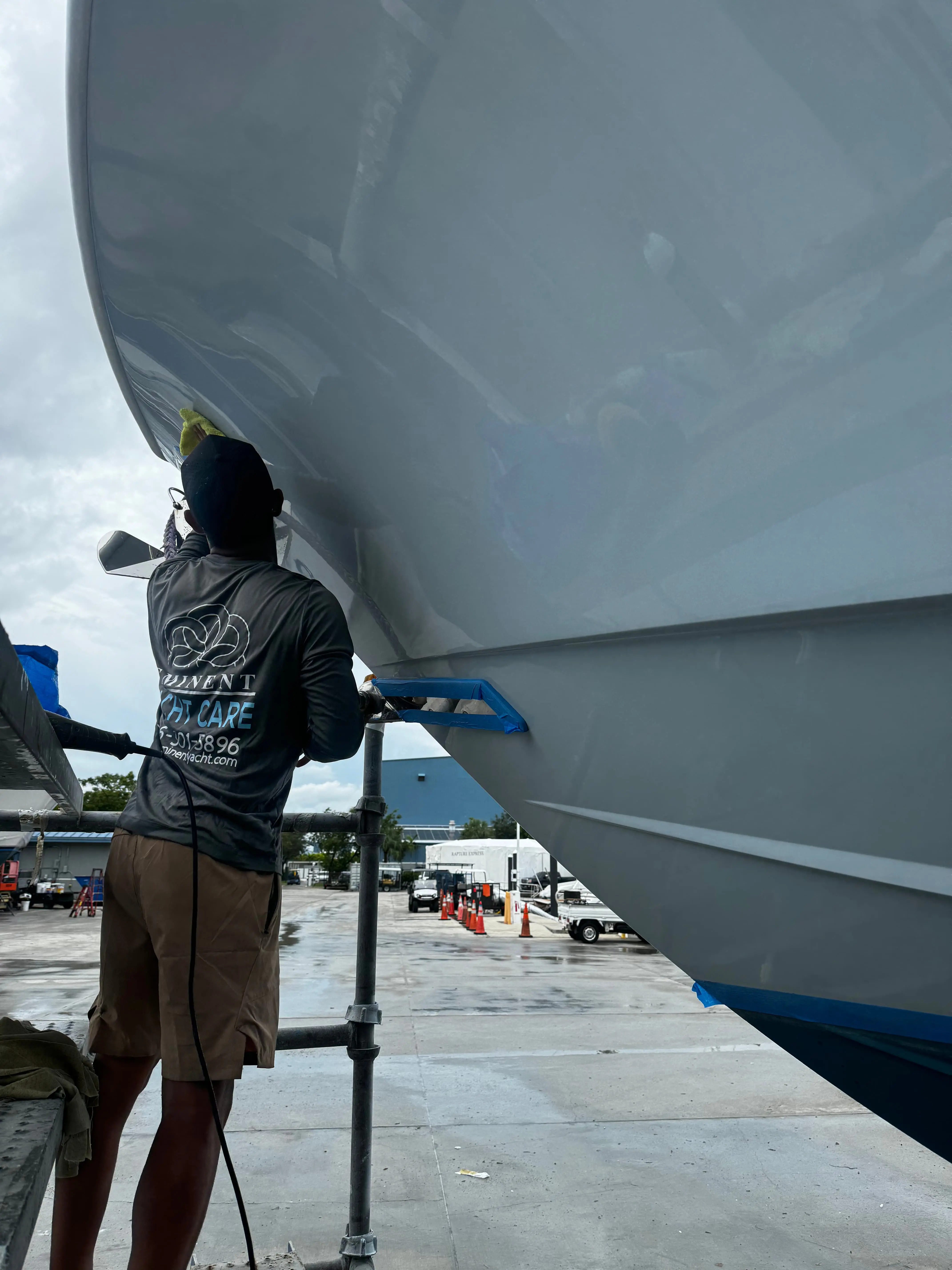
When I recommend ceramic coating, it’s because I see the same patterns of damage over and over again:
1. UV Damage and Oxidation
Intense sun is relentless on yacht surfaces. UV breaks down the resins in gelcoat and paint, causing:
-
Dull, chalky finishes
-
Faded color
-
Patchy gloss that never quite looks clean
Ceramic coating creates a UV-resistant barrier that slows this breakdown dramatically, keeping your color deeper and your gloss more consistent for far longer than wax alone.
2. Salt and Mineral Deposits
Salt water is corrosive. Left on the surface, it starts to etch and stain, especially when mixed with sun and heat. Hard water from dock hoses adds mineral spots on top of that.
A ceramic-coated surface resists this buildup. Salt and minerals don’t “bite” as easily into the coating, and most of what lands on your yacht rinses away with much less effort.
3. Chemicals, Fuel, and Everyday Contaminants
Your yacht is constantly exposed to:
-
Diesel exhaust and soot
-
Fuel drips at the dock
-
Bird droppings and bug splatter
-
Cleaning chemicals from regular washdowns
Ceramic coating creates a chemically resistant layer that helps protect the underlying surface from permanent stains and etching. It doesn’t make your yacht indestructible, but it gives you more time to safely remove contaminants before they cause damage.
Why I Rarely Recommend Ceramic Coating Without Paint Correction
One of the biggest misconceptions I see is owners wanting to “seal in” their paint exactly as it is with ceramic. The problem? Coatings are incredibly clear and glossy—so they enhance everything, including flaws.
That’s why, at Eminent Yacht Care, I almost always recommend pairing paint correction with ceramic coating, especially on older or heavily used yachts.
What Paint Correction Really Does
Paint correction is a multi-step polishing process designed to:
-
Remove or reduce oxidation
-
Level out swirl marks and light scratches
-
Clear up haze and restore clarity
-
Bring back depth and gloss to tired surfaces
When we finish a proper correction, your yacht already looks dramatically better—richer color, sharper reflections, and a “wet” look that turns heads on the dock.
Then Ceramic Coating Locks It In
Once the surface is corrected, then we apply ceramic coating. That’s where the magic happens:
-
The corrected, high-gloss finish becomes “frozen in” under the coating.
-
The coating amplifies the clarity of the polished surface, creating that true mirror-like reflection you see in premium before-and-after photos.
-
The protection we apply now helps ensure you don’t need such aggressive correction again for a very long time.
Skipping paint correction and applying ceramic directly to a dull, oxidized surface is like placing a glass screen protector over a cracked phone. It’ll be protected—but it won’t look the way you want.
The Long-Term Payoff: Less Maintenance, Better Value
From a cost and time standpoint, combining paint correction with ceramic coating is one of the smartest investments you can make in your yacht’s exterior.
Here’s why my clients are so happy with the results:
-
Far fewer heavy details
Instead of needing aggressive compounding every season, we simply maintain the coated surface with gentle washdowns and the occasional decontamination. -
No more constant waxing
Ceramic largely replaces the need for regular waxing. You trade recurring wax jobs for a single, properly executed coating and smart maintenance. eminentyacht.com+1 -
Protection that actually lasts
Depending on the coating package and care, we’re talking about years of protection, not weeks. That means your long-term cost of ownership drops while your yacht consistently looks better. -
Higher resale appeal
A yacht with deep gloss, minimal oxidation, and documented ceramic protection sends a strong message to future buyers about how well it’s been cared for.
When It’s the Right Time to Combine Paint Correction and Ceramic Coating
From my experience working on yachts across Miami, Fort Lauderdale, and West Palm Beach, there are a few clear signals that it’s time to look at this combo:
-
Your gelcoat or paint looks dull or chalky, even after a wash.
-
You see swirl marks and light scratches in the sun.
-
Water no longer beads on the surface; it just sheets and sticks.
-
You’re tired of frequent waxing that never seems to last.
-
You’re preparing the yacht for sale and want it to stand out.
If you’re checking even two or three of these boxes, a proper paint correction followed by ceramic coating can transform both the look and the workload of owning your yacht.
How I Approach This Service at Eminent Yacht Care
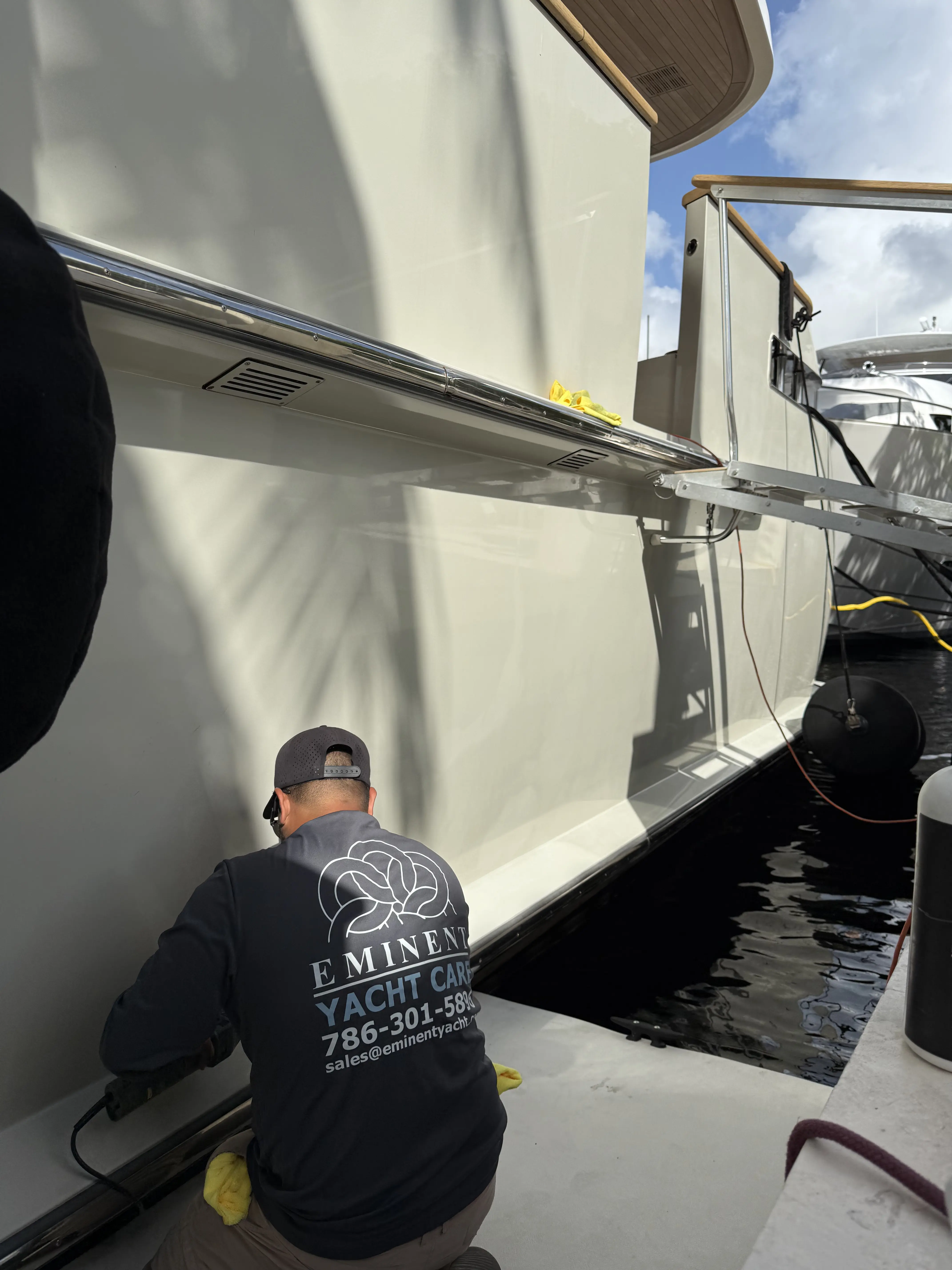
When I take on a new project, I don’t start by selling you on the most expensive package—I start with an honest assessment of your yacht’s condition and how you actually use it.
Typically, I will:
-
Inspect your paint or gelcoat up close in good lighting to identify oxidation, scratches, and previous repairs.
-
Recommend the appropriate level of paint correction, from light polishing to multi-step compounding and refining.
-
Select the right ceramic system for your vessel and usage patterns (cruising, charter, sportfishing, etc.).
-
Explain realistic expectations: how long the coating should last, how to maintain it, and what it will and won’t protect against.
My goal is simple: deliver a finish that makes you proud every time you walk down the dock—and a maintenance routine that fits your reality, not just a brochure.
Ready to Protect Your Yacht’s Finish for the Long Term?
If you’re considering ceramic coating and want to do it right, pairing it with professional paint correction is the way to achieve that deep, mirror-like gloss and long-lasting protection.
On every job, I treat your yacht’s surfaces as if they were my own—carefully, methodically, and with the long game in mind.
If you’d like a tailored recommendation for your vessel, you can explore our Ceramic Coating and Paint Correction services on the Eminent Yacht Care website, or reach out directly through the contact page to schedule a consultation.
Recent Posts
- Created at : 16 December 2025
- Created at : 16 December 2025
- Created at : 29 November 2025