

- access_time27 October 2025
- account_circleJuan Dangelo
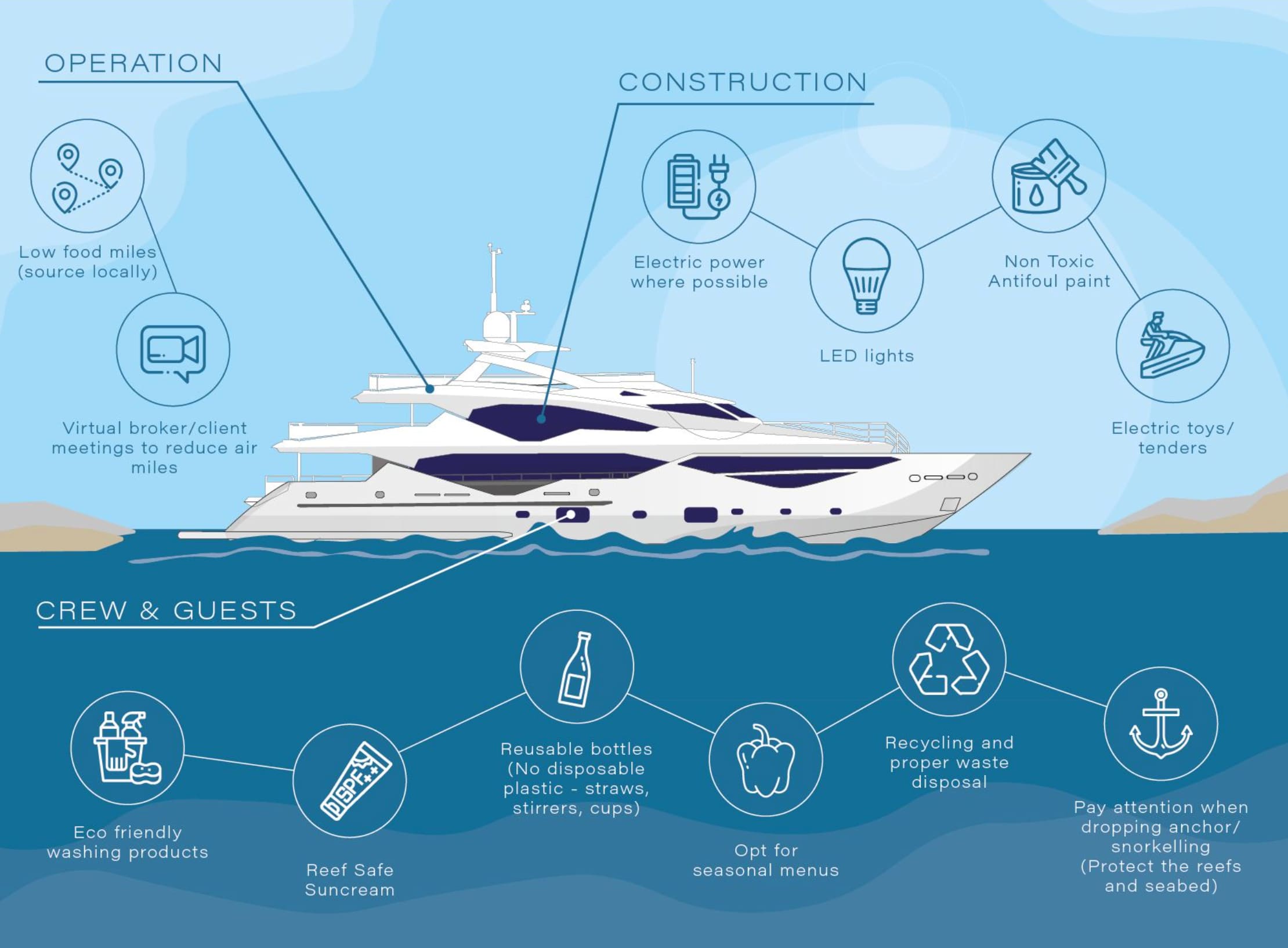
Short answer they can be—especially at the local scale. Globally, recreational boats are a tiny slice of emissions, but in bays and near-shore habitats, the impacts from fuel use, discharges, antifouling paints, and anchoring can add up. The upside: thoughtful choices and modern tech dramatically shrink your footprint.
Global vs. local impact (what actually matters)
-
Global share is small. Recreational boats account for <0.1% of global GHG emissions; about 0.7% of transportation CO₂ in the U.S. and 0.4% in Europe. Good to know, but not a free pass.
-
Local waters are sensitive. In marinas and coves, boating can degrade water quality and habitats if waste, fuel, coatings, and anchoring aren’t managed well.
The four biggest environmental pain points—and easy wins
1) Engine emissions (CO₂, NOₓ, particulates)
What’s the issue? Fuel burn and idle time create local air pollutants and CO₂. New and larger yachts operating in Emission Control Areas must meet tighter MARPOL Annex VI Tier III NOₓ limits. Even if you’re not in scope, efficiency matters.
Do this: Cruise at efficient speeds, keep hull/props clean to cut drag, and use shore power at berth where available.
2) Sewage & greywater
What’s the issue? Discharges add nutrients and pathogens to enclosed waters. In the U.S., No-Discharge Zones (NDZs) ban vessel sewage releases (treated or not) within designated areas. Greywater rules vary by region and vessel class.
Do this: Use certified MSDs,
pump out regularly, choose biodegradable cleaners, and store
greywater when practical.
3) Antifouling paints (biocide leaching)
What’s the issue? Many bottom paints leach copper (and other biocides) into the water and sediments, affecting non-target species. Regulations and studies continue to evaluate risks and alternatives.
Do this: Consider
foul-release/low-toxicity systems where
suitable, and make sure sanding/wash water is captured and
disposed of correctly at the yard.
4) Anchoring on sensitive habitats
What’s the issue? Traditional anchoring and swing moorings can scar seagrass and damage benthic habitats; cumulative damage fragments nurseries for fish and invertebrates. Eco-mooring solutions elevate chains off the seabed and reduce scouring.
Do this: Use mooring buoys when provided;
otherwise anchor on sand away from seagrass and coral.
A simple, lower-impact operating routine
-
Plan efficient speeds/routes and keep running gear clean to cut fuel burn (and costs).
-
Respect NDZs and pump out; switch to biodegradable, low-phosphate cleaners.
-
Choose smarter coatings and follow best practices at haul-out.
-
Prefer moorings or anchor on sand; avoid seagrass/coral zones.
-
Maintain engines and understand applicable Tier III requirements in ECAs.
Make sustainability effortless with a managed program
If you want greener boating without the homework, partner with a professional management team that bakes these practices into your routine: scheduled hull/prop cleanings, NDZ/pump-out checklists, guidance on lower-impact antifouling, and crew briefings on eco-anchoring. A concierge-style monthly plan keeps the boat trip-ready while keeping your footprint low.
Yachts don’t have to be “bad” for the environment. With informed choices on speed, maintenance, discharges, coatings, and anchoring, you can protect local waters and habitats—and still enjoy every mile.
Recent Posts
- Created at : 16 December 2025
- Created at : 16 December 2025
- Created at : 29 November 2025